Custom Welding Positioners
Positioners custom built for your part.
Sized to your part's weight, geometry, and weld path. Whether it's one component of a larger system or a standalone for your floor.
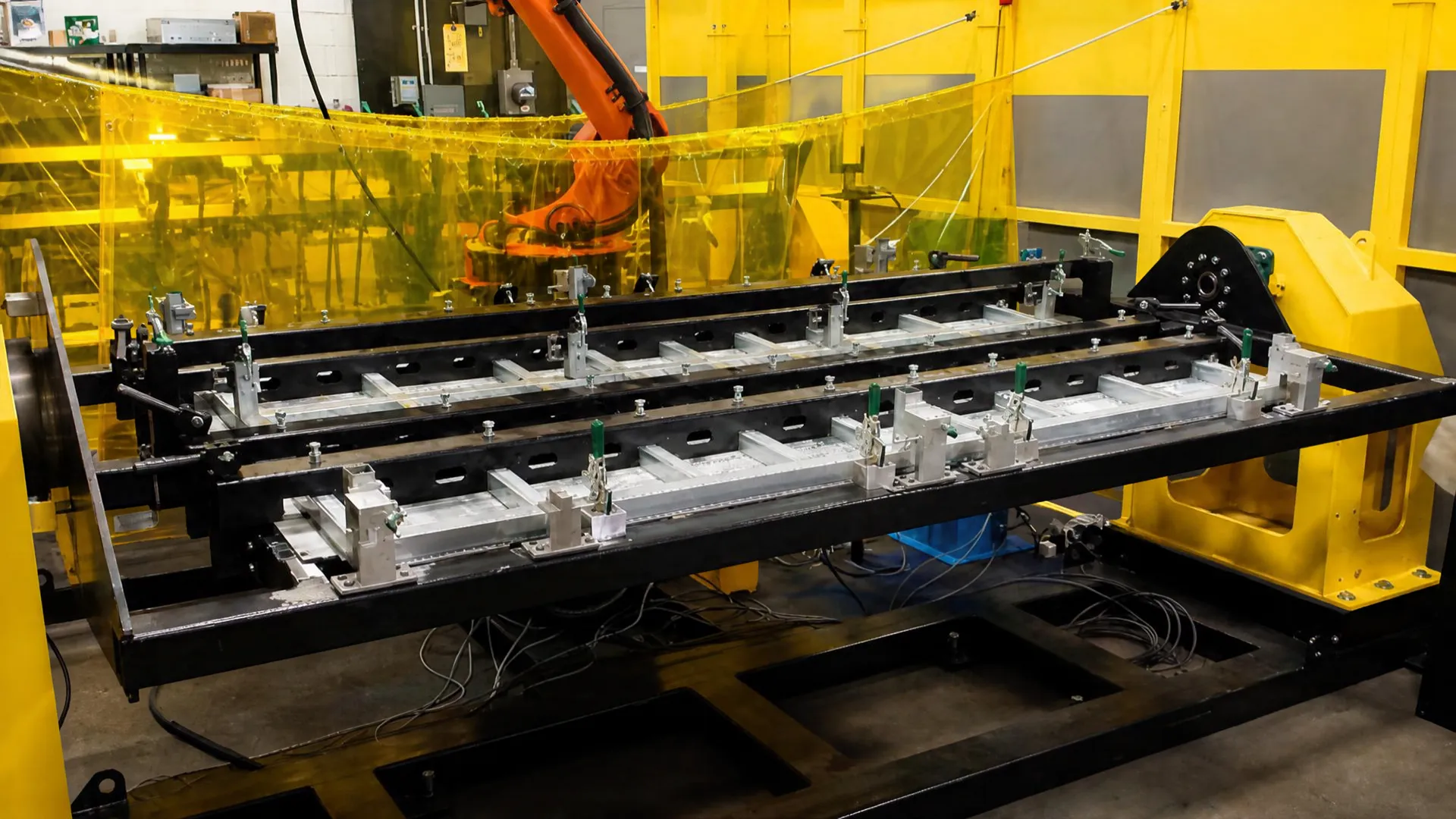
COMMON PROBLEM WE SOLVE
You need a positioner. You can't afford to get it wrong.
Standard positioners don't fit your part.
Your part is too big, too heavy, or too awkward for what's off the shelf. Forcing it onto the wrong platform means joints the torch can't reach and welds you end up fixing by hand.
It has to work with the robot you already have.
A positioner that isn't coordinated with your robot moves on its own schedule, not the weld's. Getting the two to work as one system takes engineering that's easy to underestimate.
You don't know who will be there once it's on your floor.
A positioner without support is dead weight the first time it needs adjustment. And when it stops, the robot it serves stops with it.
Solution
Get a positioner that checks all your boxes.
We evaluate your process before we quote, design and build custom positioners under one roof, and stay on after install. The sooner you know what will work, the sooner your robot reaches every joint it needs to.
Built custom when standard won't fit.
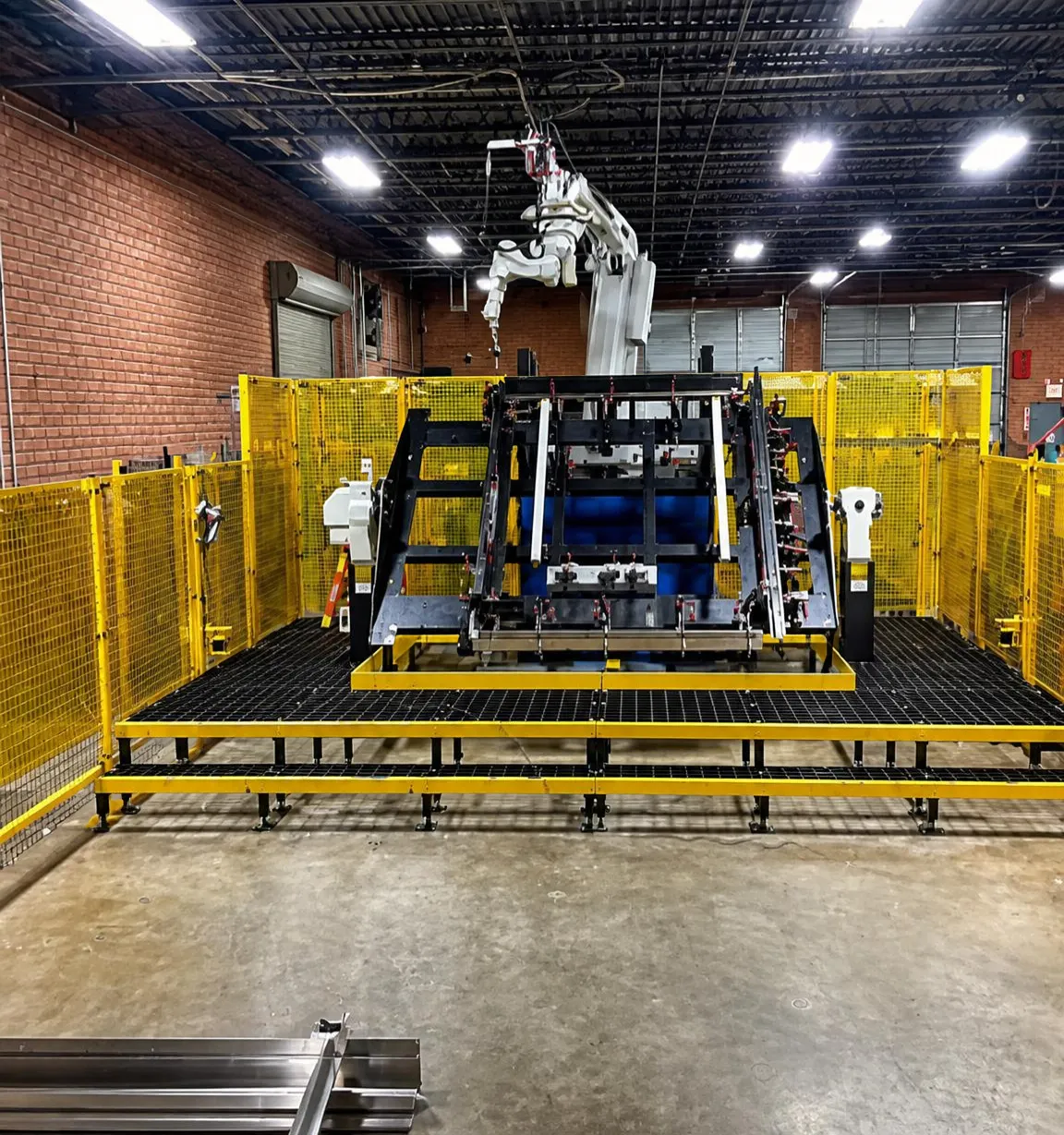
Single or multi-axis positioners, turntables, and turning rolls, sized to your part's weight, geometry, and weld path. When a proven standard positioner does the job, we supply one. When nothing on the market can, we build it, like a 10-foot turntable for large steel floor panels.
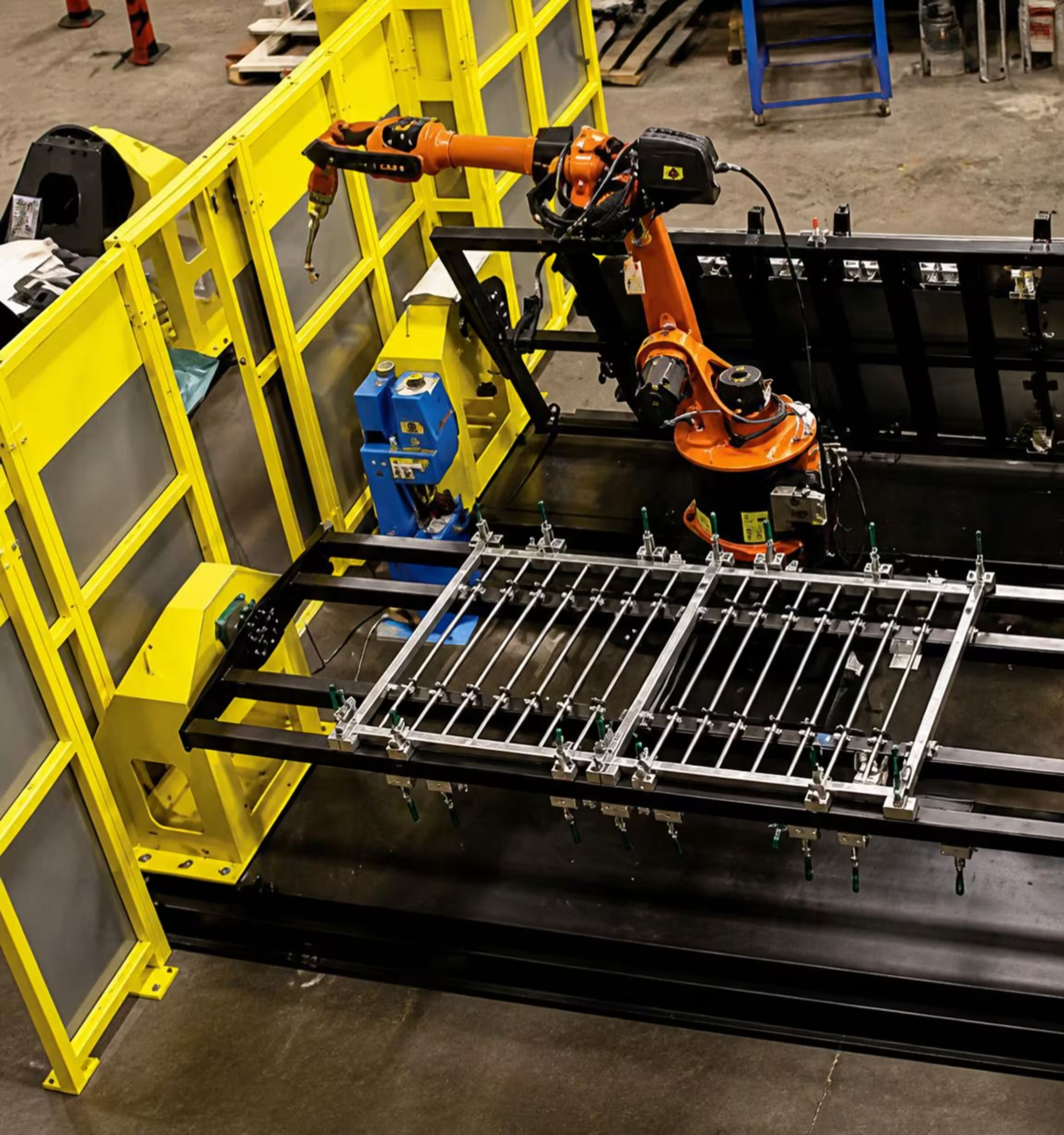
We make the positioner part of the robot.
We can integrate your positioner as an extra robot axis, so the part moves in coordination with the torch instead of on its own. On one sub-arc project, we motorized a set of turning rolls so the robot controls the tank's rotation as it welds.
Support is easy to promise. We pick up the phone.
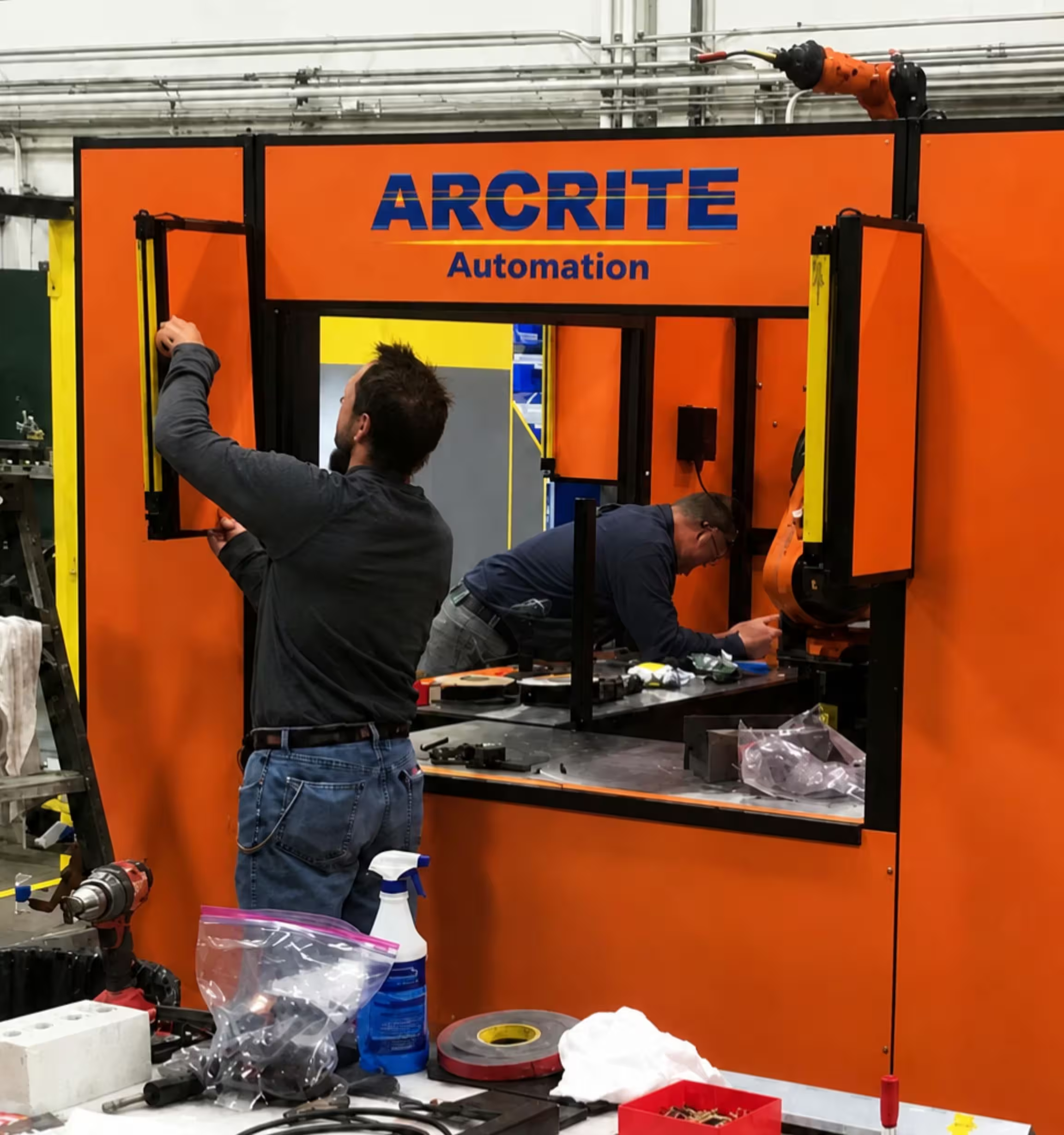
We stay on long after the positioner ships. Troubleshooting, adjustments, and upgrades as your operation grows, from the people who built it.
The Arcrite Method
Full turnkey project
from first visit to full
production.
Site visit and feasibility study
We visit your facility, run a time study, and review your parts and tolerances. Including upstream and downstream processes.
Concept and budget
You get a concept and a realistic budget, so you know the size of the investment before engineering starts.
Engineering and build
Our team designs, tools, programs, and builds your system locally in Waterford, Connecticut.
Install and training
We install on-site and train your team on changes upstream, downstream, so nothing comes as a surprise.
Ongoing support
We stay on for troubleshooting, adjustments, and upgrades as your operation grows, from the people who built it.
Built with proven technology.
Selected to fit your parts, your tolerances, your production. Not the other way around.







FAQs
A welding positioner holds your part and rotates or tilts it so each joint is presented to the torch at the best angle. Welding in a flat or horizontal position is faster and produces more consistent welds, whether a person or a robot is doing the welding.
A welding turntable spins the part on a flat, horizontal table. A rotary welding positioner adds tilt, so it can present joints from more angles. A welding rotator, or turning rolls, spins round parts like tanks and cylinders on their side. We build and supply all three.
If a standard weld positioner fits your part's size, weight, and weld path, we'll supply a proven one rather than build from scratch. We build custom when nothing on the market fits, like a 10-foot turntable we built for large steel panels.
Yes. Robotic welding positioners can be integrated as an extra robot axis, so the part moves in coordination with the torch instead of on its own. On one sub-arc project, we motorized a set of turning rolls so the robot controls the tank's rotation as it welds.
A single-axis positioner works well when your welds run around one axis of the part. For parts with complex weld paths, where a single rotation can't present every joint cleanly to the torch, a multi-axis positioner is usually the better fit. The on-site evaluation tells you which one your part needs.
Yes. Turning rolls and rotators handle round parts like tanks, cylinders, and pipe, and we've integrated them into robotic sub-arc systems for large tanks.
No. We look at your parts, tolerances, and production, and tell you honestly what we find. There's no obligation attached.
Still have questions?
Message us. We’ll answer them!
Your automation project doesn't have to be a guess.
Get a personalized on-site evaluation so you know what it takes before you invest a single dollar.